

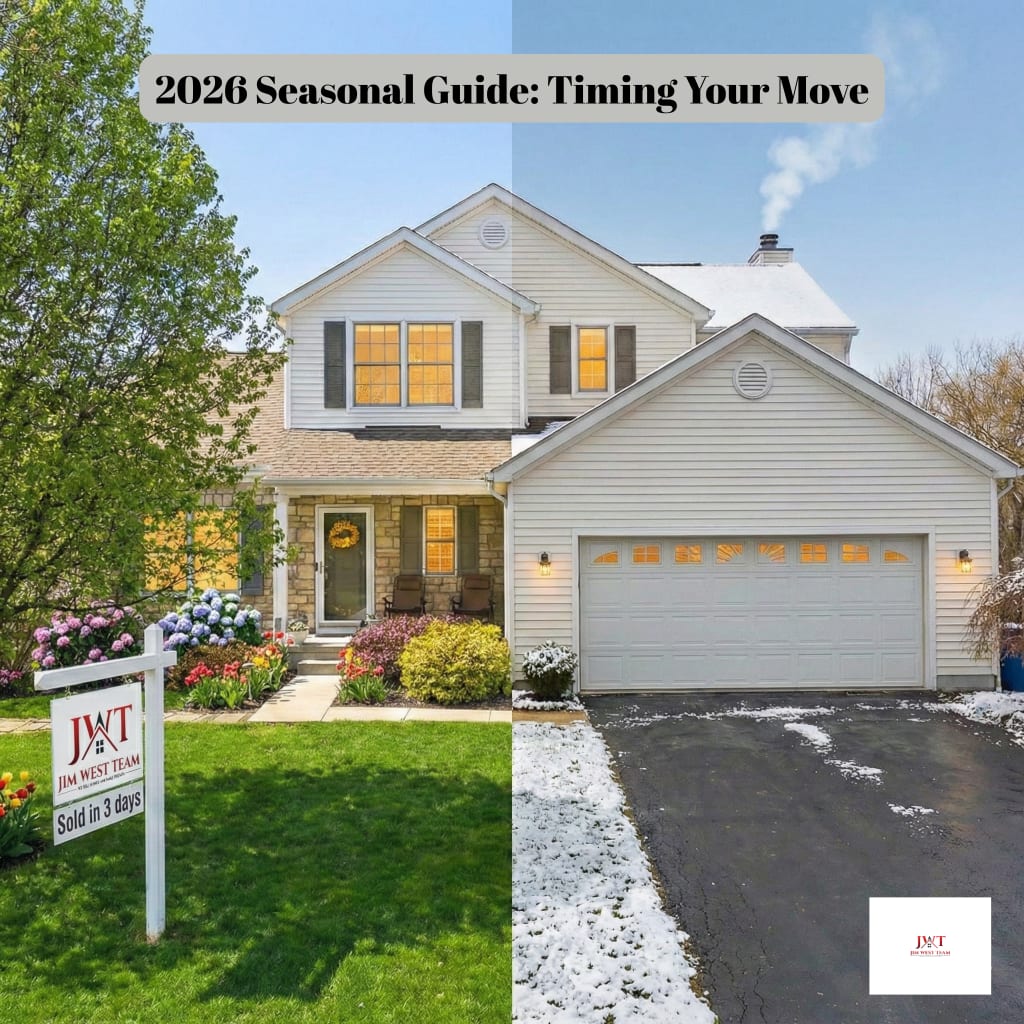


Timing isn’t everything in real estate, but it is often the difference between saving $20,000 or paying a premium. It determines whether you sell in 30 days or wait three months, and whether you negotiate from a position of strength or uncertainty.
For a complete, step-by-step selling framework, visit the Marysville Seller Playbook—the central resource that connects pricing, preparation, marketing, timing, and negotiation into one cohesive plan for Marysville sellers.
As we look toward 2026, understanding seasonal patterns is critical. With inventory levels normalizing and market conditions evolving, the season you choose impacts your bottom line. Whether you are a first-time buyer watching every dollar or a seller maximizing profit, this guide breaks down the pros and cons of every season.
Quick Summary: The Best Time to Move

- Best Time to Sell for Profit: May (Highest seller premiums).
- Best Time to Buy for Deals: January (Lowest competition).
- Fastest Sales: Spring (Homes sell in ~33 days).
- Best "Sweet Spot": October (Lower prices, serious market participants).
Spring: Peak Selling Season (March-May)
The High-Energy Seller’s Market
Spring is peak season for a reason. The housing market wakes up, driven by longer daylight hours and blooming curb appeal. If your goal is maximum profit and speed, this is your window.
For Sellers: The "May Premium"

Data consistently shows that homes listed in spring sell fastest—often in as few as 33 days (compared to 49 in winter). Specifically, May offers the highest seller premium, historically averaging 13.1% above market value.
For Buyers: Prepare for Battle
The trade-off for spring's high inventory is fierce competition.
- Bidding Wars: In May and June, roughly 35% of buyers pay above list price.4
- The Strategy: You must be pre-approved and ready to act immediately. The "perfect" house will not wait for you to think it over.
Key Insight: Spring blooms and greenery boost curb appeal in ways winter staging simply cannot match, creating an emotional connection that drives up offers.3
Summer: Extended Peak Season (June-August)
The Family Timeline & Transition
As spring transitions to summer, momentum continues. June often sees the highest total sales volume of the year, with over 16,500 homes selling daily.
The Family Factor
Summer is dominated by families timing their moves around the school calendar.
- Pros: Kids can transition without disrupting the school year; warm weather makes moving easier.
- Cons: Moving costs peak. Nearly 50% of all household moves occur between June and August, meaning movers and trucks charge premium rates.5
The Late-Summer Shift
By August, the market shifts. Listings that didn't sell in May or June may become "stale," and buyer urgency cools as the school year begins. This creates a transition period where patient buyers can find opportunities before the fall rush.
Fall: The Underrated Opportunity (September-November)
The "Goldilocks" Season for Smart Buyers
Fall is real estate's best-kept secret. While the masses fight in spring, savvy investors often transact in autumn.
Why October is for Buyers
October typically offers optimal conditions for purchasing.
- Lower Premiums: Seller premiums drop to roughly 8.8% (down from spring's 13%+).2
- Price Dips: Home prices tend to retreat from summer highs, potentially saving buyers thousands.4
- Serious Participants: The "window shoppers" are gone. Everyone left in the market—buyers and sellers alike—is motivated to close before the holidays.
Urgency Without Panic
Fall buyers are decisive. They want to be settled before the holidays and bad weather arrive. If you are selling in the fall, you may get fewer showings, but the people walking through the door are ready to write an offer.
Winter: The Value Season (December-February)
Low Competition, High Negotiation Power
Winter has a bad reputation, but strictly by the numbers, it is the best financial opportunity for flexible buyers.
The Numbers: Buying Power
- Discounts: Only 24% of buyers pay above list price in January (vs. 35% in peak season).
- Time: Homes average 49 days on market, giving you breathing room to think and negotiate.
- Leverage: Sellers listed in January are usually highly motivated (relocation, financial necessity) and more willing to offer concessions.
Winter Challenges
- Inventory: Selection is at its lowest point of the year.
- Curb Appeal: It is harder to assess landscaping or roof conditions under snow.
- Logistics: Snow and ice make moving physically difficult and hazardous.
Comparison: Pros & Cons by Season

Regional Nuances: Geography Matters
Real estate is hyper-local. A strategy that works in Ohio may fail in Arizona.
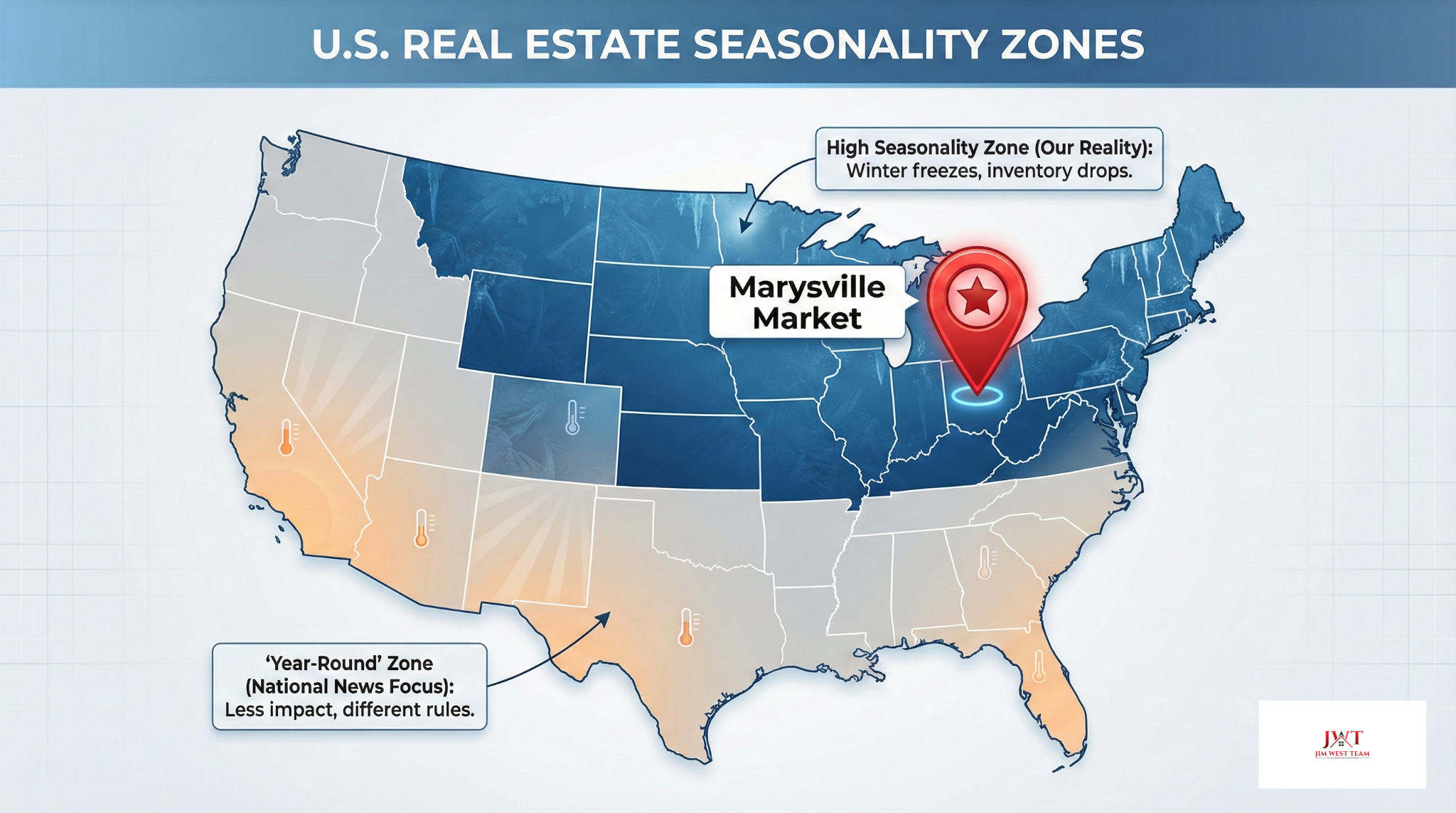
- Midwest & Northeast: These regions experience massive seasonal swings. Daily home sales can double from January to June due to harsh winters.
- South & West: Markets like California and Florida enjoy stable, year-round activity.
- The "Snowbird" Effect: In areas like Phoenix, AZ or parts of Florida, winter is actually the peak season as buyers flock to the mild weather. In these markets, November may be the best time to sell, contrary to national trends.
Tactical Guide: Pricing & Strategy
Pricing Strategy
- Spring: Price aggressively. Listing slightly below market value can spark bidding wars. Use psychological pricing (e.g., $349,000 instead of $350,000).
- Fall/Winter: Price realistically. Buyers are looking for value. Listing 5–10% below spring comparables can generate immediate interest from the smaller buyer pool.
Negotiation Strategy
- Buying in Peak Season: Use escalation clauses and limit contingencies to win.
- Buying in Off-Peak: Ask for seller concessions. Request closing cost credits, home warranties, or repairs. Use inspection results to negotiate price reductions.
Selling in Marysville? Deep Dive into the Data
These supporting guides expand on individual sections of the Marysville Seller Playbook.
- 👉 1. Timing: When is the best time to sell in Marysville?
- 👉 2. Costs: Cost to sell a house in Marysville (Net Sheet)
- 👉 3. Speed: Days on market and pricing strategy
- 👉 4. Condition: As-Is vs. Repair decisions
👉 For the complete selling framework, visit the Marysville Seller Playbook.
Frequently Asked Questions About Marysville Real Estate Timing
What is the best month to sell a house in Marysville, Ohio?
Historically, May is the best month to sell for maximum profit in the Marysville area, offering seller premiums up to 13.1% above market value due to peak buyer activity.
Is it better to buy a house in winter or summer in Ohio?
For price, winter (specifically January) is better, as competition is lower and buyers pay fewer premiums. For selection, summer offers the highest inventory but comes with higher prices and bidding wars.
Bottom Line
Seasonality creates financial patterns, but life events should drive your timing.
Spring brings the highest prices, while winter offers the best deals. However, waiting for the "perfect" market doesn't help if you need to relocate for a job in January or accommodate a new baby in July. The best time to move is when it's right for you—but knowing these seasonal trends allows you to strategize effectively within your timeline.
Ready to Sell Your Marysville Home?
Get your custom pricing and timing strategy today.
- 📞 Call or text: (614) 507-5732
- 📧 Email: jimwest@jimwestteam.com
Sources & Data References
- National Association of REALTORS®. Navigating the Housing Market: A Seasonal Perspective. 2024.
- Bankrate. Best Time to Sell a House. 2024.
- Investopedia. How Seasons Impact Real Estate. 2024.
- Zillow. Best Time to Buy a House Analysis.
- My Moving Journey. Moving in Peak Season vs. Off-Season Data.
Disclaimer: This content is for general informational purposes only and is not legal, tax, or financial advice. Consult licensed professionals for your specific situation.