



What repairs should a buyer ask the seller to fix after a home inspection?
After a home inspection in Marysville, Ohio, focus your repair requests on safety, structural, and major system problems — not cosmetic flaws or routine upkeep. Spending your leverage wisely is what keeps the deal alive.
Here is something I see cost buyers the house they wanted: they treat the inspection report like a renovation wish list. Every nick, every dated fixture, every "the inspector said it's near the end of its life" item gets handed back to the seller as a demand. In a slower market, a seller might play along. In Marysville and Union County right now, where well-priced homes go under contract in about a week and sellers often have a backup offer in their pocket, that approach can blow up a perfectly good deal.
I work with a lot of move-up buyers and downsizing empty-nesters — folks who are usually selling one home and buying the next at the same time. So I see this from both sides of the table. When you understand which repair requests a seller will actually entertain and which ones make them walk, you keep your negotiating power where it counts.
This is the buyer's playbook: what to let go of, and what you should never let slide. If you're buying for the first time, it helps to see where the inspection fits in the larger process — realtor.com's first-time home buyer guide is a good overview of the full path.
First, understand what the inspection is actually for
A home inspection exists to surface material defects — problems that affect the safety, structure, or function of the home. It is not a punch list for bringing a used house up to brand-new condition. Every home, even a great one, will have findings. A 12-page report is normal. The skill is reading it for what matters, not reacting to the length.
Your agent should help you sort the report into three buckets: things that are dangerous or broken, things that are just old or cosmetic, and things you already knew about when you made your offer. Only the first bucket is worth a fight.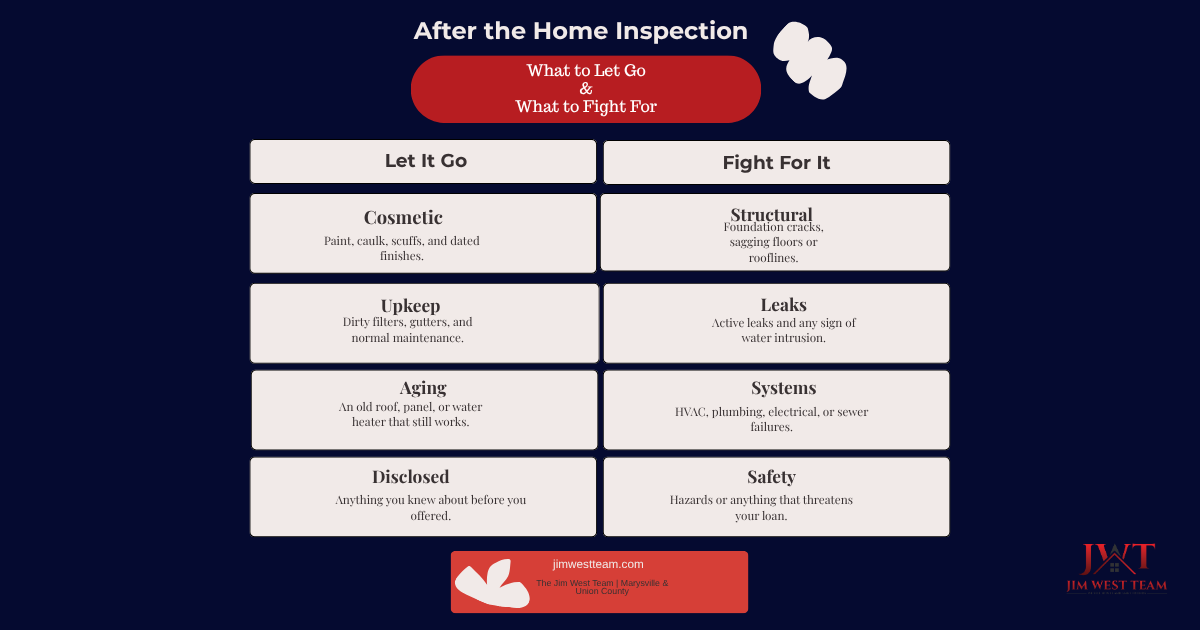
Repair requests that kill deals (let these go)
1. Cosmetic flaws
Chipped paint, worn caulk, a scuffed floor, a loose cabinet handle, dated tile. None of it affects whether the home is safe or functional. Asking a seller to repaint a room or re-caulk a tub reads as nitpicking, and it spends goodwill you may need later for something real.
2. Routine maintenance
Dirty HVAC filters, a gutter that needs cleaning, a few loose deck screws, a furnace that's due for service. These are normal homeownership tasks, not defects. You'll be handling items like these for as long as you own the home — asking the seller to do them first rarely lands.
3. Upgrades dressed up as repairs
This is the big one. A roof that's 18 years old but not leaking is not a broken roof. A working electrical panel that an inspector flags as an older brand is not an emergency. A functional water heater near the end of its typical lifespan is still functional. Asking the seller to replace working components because they're aging is asking for an upgrade on their dime — and most sellers say no.
4. Code upgrades on an older home
Older homes in Union County were built to the code of their era, and they're allowed to stay that way. Unless something is genuinely unsafe, demanding that a seller bring a 1990s home up to current code — rewiring, adding outlets, modern railing heights — is a request that usually gets refused and sours the negotiation.
5. Anything you already knew about before you offered
If the listing said "sold as-is," or the seller's disclosure flagged it, or you saw it plainly on your showing, you can't reasonably circle back after inspection and ask them to fix it. You factored it into your offer — or you should have. Sellers remember what they disclosed, and re-litigating it erodes trust fast.
6. Everything at once (the kitchen-sink list)
Even when individual items are legitimate, handing the seller a 15-line demand makes you look unreasonable and invites a flat "no" to the whole thing. Pick your real concerns. A short, serious list gets taken seriously. A long one gets you a counter that fixes nothing.
Repairs worth fighting for (never let these slide)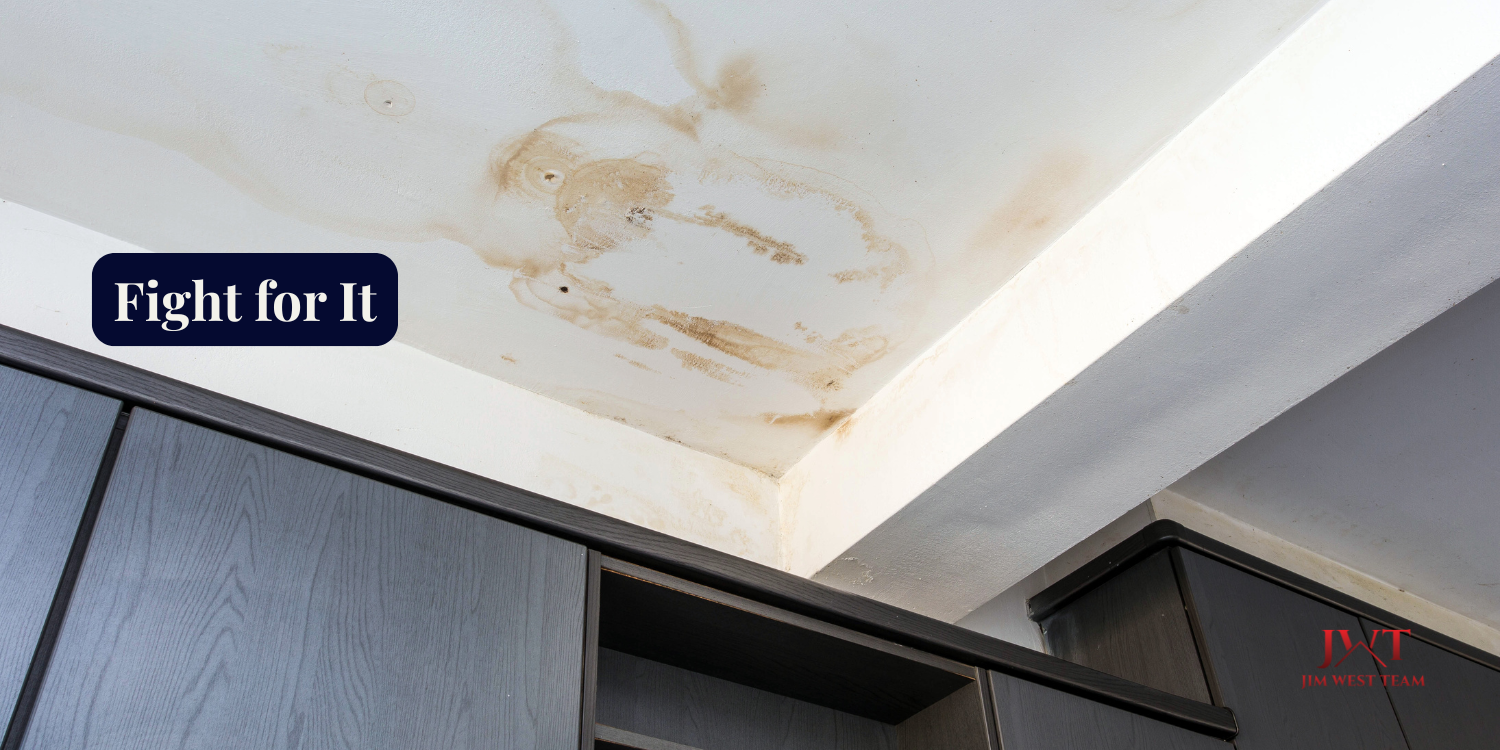
Now the other half — because letting the wrong thing go can cost you far more than the house. These are the findings where you should hold firm, ask for a repair or a credit, and be willing to walk if the seller won't address them:
- Structural problems — foundation cracks beyond hairline settling, sagging floors or rooflines, compromised load-bearing walls.
- Active roof leaks and water intrusion — not an old roof, but one that's actually letting water in. Water is the most expensive problem a home can have.
- Failing major systems — a furnace or AC that doesn't work, a non-functioning water heater, significant plumbing leaks, a sewer line problem.
- Electrical and safety hazards — exposed or improper wiring, no working smoke or carbon monoxide protection, a panel that's genuinely unsafe (not just old).
- Mold, radon, or environmental issues — anything that affects health or requires remediation.
- Anything that threatens your financing or insurance — if an appraiser or insurer would balk at it (common with FHA and VA loans), it's not optional. It can sink your loan, not just your comfort.
The simple test: does it affect safety, the structure, or your ability to close the loan? If yes, it belongs on the list. If it's about age, looks, or preference, let it go.
How to make a repair request that actually works
In a market like Marysville's, how you ask matters as much as what you ask for. A few things I coach my buyers on:
- Prioritize ruthlessly. Lead with the items that affect safety and financing. Drop the rest.
- Consider a credit instead of a repair. Often the cleaner move is a closing-cost credit so you control the work and the contractor after you own the home — rather than hoping the seller hires someone good.
- Get a real number when it's a big item. A licensed estimate on a major repair turns "fix my roof" into a specific, reasonable ask the seller can evaluate.
- Lean on your agent's read of the seller. Whether they have a backup offer, how long they've been on the market, and how motivated they are all change what's realistic. That's exactly the read I give my buyers in Union County.
Handling the inspection well is just one step in the buying process. For the full path — from pre-approval and financing through making an offer, inspections, and getting to closing — see my Marysville buyer resources guide.
Frequently Asked Questions
Can a seller refuse to make repairs after a home inspection in Ohio?
Yes. In Ohio, an inspection is generally a buyer's tool to investigate the property, not a requirement that the seller fix anything. The seller can decline your requests, and depending on your contract, you may then negotiate, accept the home as-is, or exercise your inspection contingency to walk away. Your agent and the purchase contract govern your options — ask before you assume.
Should I ask the seller for a repair or a closing credit?
For most issues, a closing credit gives you more control — you choose the contractor and confirm the work is done right after closing. A repair by the seller can make sense for items tied to financing or insurance that must be resolved before you close. The right choice depends on the item and the timeline.
What if the inspection finds something major?
A serious finding — structural, roof, a failing system, a safety hazard — is exactly what the inspection contingency protects you from. You can request a repair or credit, renegotiate the price, or walk away if the seller won't address it. The worst outcome is staying silent on something that affects safety or your loan. Bring it to your agent immediately.
A straight answer when you need one
Whether you're buying your first home or selling one and moving up at the same time, knowing where to push and where to ease off is the difference between getting the house and watching it slip away. If you have questions about buying or selling a home in Marysville or Union County, I'm happy to talk — no pressure, just straight answers.
Jim West
REALTOR® | Certified Divorce Real Estate Expert (CDRE)
The Jim West Team | Marysville, Ohio & Union County
Call or text: (614) 507-5732
jimwestteam.com