

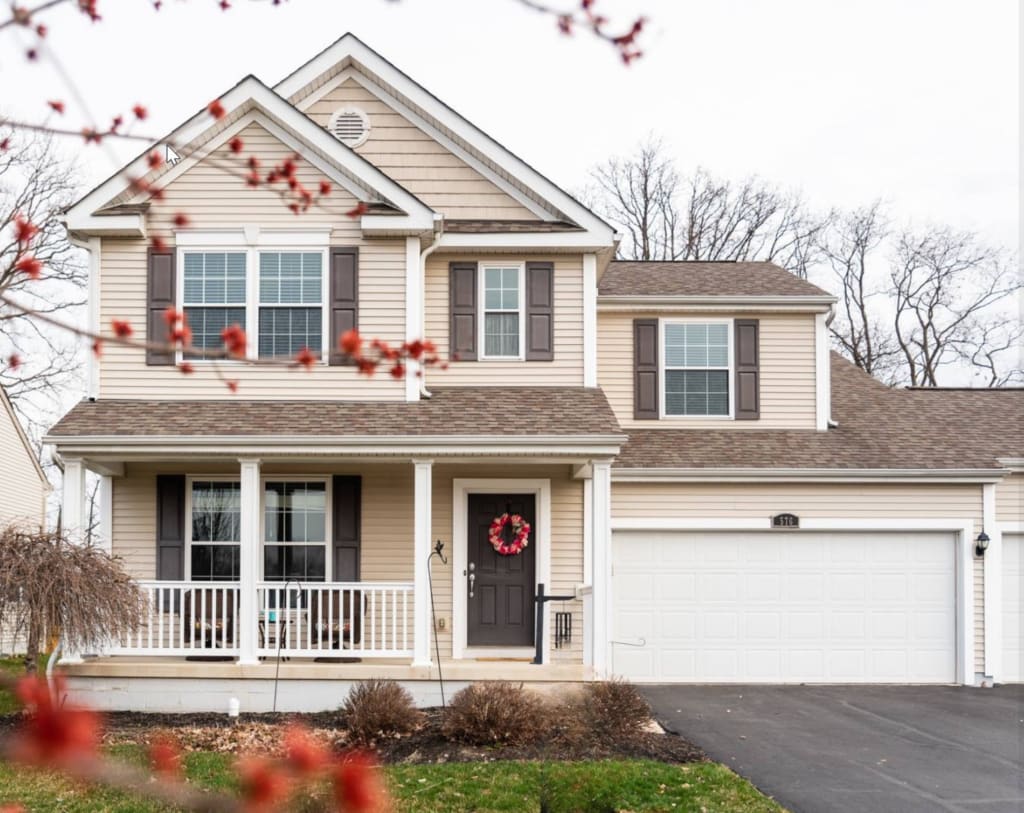

How do you sell a jointly-owned home during a divorce in Ohio?
In Ohio, the family home is a marital asset subject to equitable division, meaning both spouses have a legal claim to the equity. Before you list the property, make repairs, accept an offer, or agree to a buyout, you need to understand four realities: how marital asset law affects your decisions, how to calculate your actual walk-away number after costs, why the agent you choose matters more in a divorce sale than in any other transaction, and what every month of delay is costing both of you.
By Jim West, REALTOR® | CDRE | June 19, 2026
If you are going through a divorce in Ohio and you and your spouse co-own a home, the decisions you make in the next few weeks can have a serious impact on what you walk away with — and how cleanly this chapter closes.
This is not about rushing you. It is about making sure you do not do something that costs you money, time, or leverage before you understand how the process actually works.
I put together a short video covering the four things every divorcing Ohio homeowner needs to understand before making any decisions about the family home. Here is a breakdown of what is covered — and why each piece matters. For a full walkthrough of the process, you can also read my Ohio Divorce Home Sales Guide.
The Home Is a Marital Asset in Ohio — What That Means
In Ohio, property acquired during the marriage is generally considered a marital asset. That includes the family home, even if only one spouse's name is on the mortgage or deed. Ohio handles this through equitable division under Ohio Revised Code §3105.171 — a framework that divides marital property fairly, though not always exactly 50/50.
What that means practically: neither spouse can unilaterally sell the home, sign a contract, accept an offer, or make major decisions about the property without the other's involvement. Both parties have a legal interest in the outcome.
This matters because it shapes every conversation you have — with your attorney, with a real estate agent, and with each other. If you are working from the assumption that "it's my house" or "I paid the mortgage," that framing will cause friction. Ohio law is going to override it.
Understanding this early does not limit your options. It actually clarifies them.
Your Real Walk-Away Number Is More Complicated Than It Looks
Most divorcing homeowners look at their home's value and assume the equity split is straightforward: subtract the mortgage, split the rest 50/50, and move on.
It is rarely that clean.
Your actual net proceeds will also be reduced by agent commissions, closing costs (typically 2–3% of the sale price), any pre-sale repairs or upgrades you agree to make, outstanding liens or second mortgages, and potential capital gains exposure (IRS Topic 701). How capital gains apply in a divorce can change depending on whether the home sells before or after the divorce is final — a question to work through with your attorney or a tax advisor.
Here is how that math can shift on a $350,000 home with a $200,000 mortgage balance:
| What you see / what you net | Amount |
| Equity at a glance (value minus mortgage) | ~$150,000 |
| Less commissions, closing costs, agreed repairs | −$30,000 |
| Estimated net proceeds to split | ~$120,000 |
| Each spouse's share | ~$60,000 (not $75,000) |
That difference matters. It is why building your decision-making on the actual net figure — not the Zillow estimate — is so important.
If you are navigating a home sale during a divorce in Ohio and want someone in your corner who understands both the real estate and the legal complexity, I hold the CDRE designation — the only agent in Union County who does. Call or text me at (614) 507-5732 or visit jimwestteam.com/divorce-real-estate.
 Why the Agent You Choose Matters More in a Divorce Sale
In a typical home sale, the agent works for the seller. In a divorce sale, there are two sellers — and they may not agree on everything. That is a fundamentally different dynamic, and most agents are not trained for it.
A standard agent in a contested divorce can end up, intentionally or not, taking sides: communicating more with one spouse, advocating for one party's preferred timeline or price, or making decisions that one party later claims were made without their input. That creates legal exposure and delays that cost both parties money.
The CDRE designation exists specifically for this. An agent with that credential is trained to remain neutral, communicate transparently with both parties (or their attorneys), document decisions carefully, and keep the transaction moving even when the relationship between the spouses is fractured.
The goal is not to mediate the divorce. It is to get the home sold cleanly, at the right price, so both parties can move forward.
What Every Month of Delay Costs Both of You
Divorce proceedings take time. That is unavoidable. But when the family home sits in limbo while the legal process plays out, the financial clock is running in the wrong direction.
Every month the home is not sold, you are both absorbing carrying costs (mortgage, taxes, insurance, HOA, utilities), deferred maintenance that surfaces or worsens over time, market risk as conditions shift, and the emotional cost of prolonged connection to a situation both parties want to close.
I am not suggesting you rush a decision that has real financial consequences. I am suggesting that understanding the full cost of delay — not just the emotional cost but the dollar-per-month cost — often changes how both parties approach the timeline conversation.
What a Clean Resolution Looks Like
A clean resolution means both parties agreed on the process, the home sold in a reasonable timeframe, and both walked away with their share of the proceeds without the sale becoming an additional source of conflict.
That is achievable — even in difficult divorces — when the right infrastructure is in place: a neutral CDRE-trained agent, attorneys aligned on the goal, a listing agreement both parties have reviewed and signed, and clear communication about what decisions require mutual approval. A licensed Ohio divorce attorney handles the legal side; my job is to handle the sale itself.
I have worked with divorcing homeowners in Marysville and across Union County where the relationship between the spouses was not good. The home still sold. Both parties got their money. The process did not make things worse. If you want more background before we talk, my divorce resources and support page walks through what to expect across Central Ohio.
That is what this is supposed to look like.
Frequently Asked Questions
Can I sell my house during a divorce in Ohio?
Yes — but in Ohio, both spouses typically must agree to the sale and sign the contract since the home is a marital asset. If one spouse refuses to cooperate, the other may petition the court to order a sale, but that adds significant time and legal costs. The most efficient path is a mutual agreement to sell with a neutral, CDRE-trained agent.
What is a Certified Divorce Real Estate Expert (CDRE)?
A CDRE is a real estate agent trained in the legal, financial, and emotional dimensions of divorce-related home sales. CDREs act as neutral parties, communicate transparently with both spouses and their attorneys, and manage the unique dynamics of a transaction where the sellers may not be on speaking terms. There are very few CDREs in Union County, Ohio — Jim West is one of them.
Does my spouse have to agree to sell our house in an Ohio divorce?
In most cases, yes. The family home is a marital asset subject to equitable distribution, and both spouses typically have a say in what happens to it. If you cannot agree, a judge can ultimately order the home sold and proceeds divided. A divorce attorney and CDRE-trained agent can help you explore options — including buyout scenarios — before things escalate to court.
Ready to Talk Through Your Situation?
If you or someone you know owns a home and is going through a divorce in Ohio, I am one of the few agents in Union County who holds the Certified Divorce Real Estate Expert (CDRE) designation. I understand the legal, financial, and emotional complexity of this situation — and I am a resource, not a salesperson.
Every call is confidential and there is no pressure — just straight answers from someone who has been through this process with many homeowners in Marysville and Union County.
About Jim West
Jim West is a REALTOR® and Certified Divorce Real Estate Expert (CDRE) serving Marysville, Ohio and Union County. He holds three divorce real estate designations — CDRE, RCS-D, and CDS — making him one of the only agents in Ohio to carry all three at once. With more than 20 years in the local market, Jim specializes in helping sellers navigate complex transactions, including divorce, downsizing, and estate sales, with straightforward guidance and deep local expertise. Call or text (614) 507-5732 or visit jimwestteam.com.