

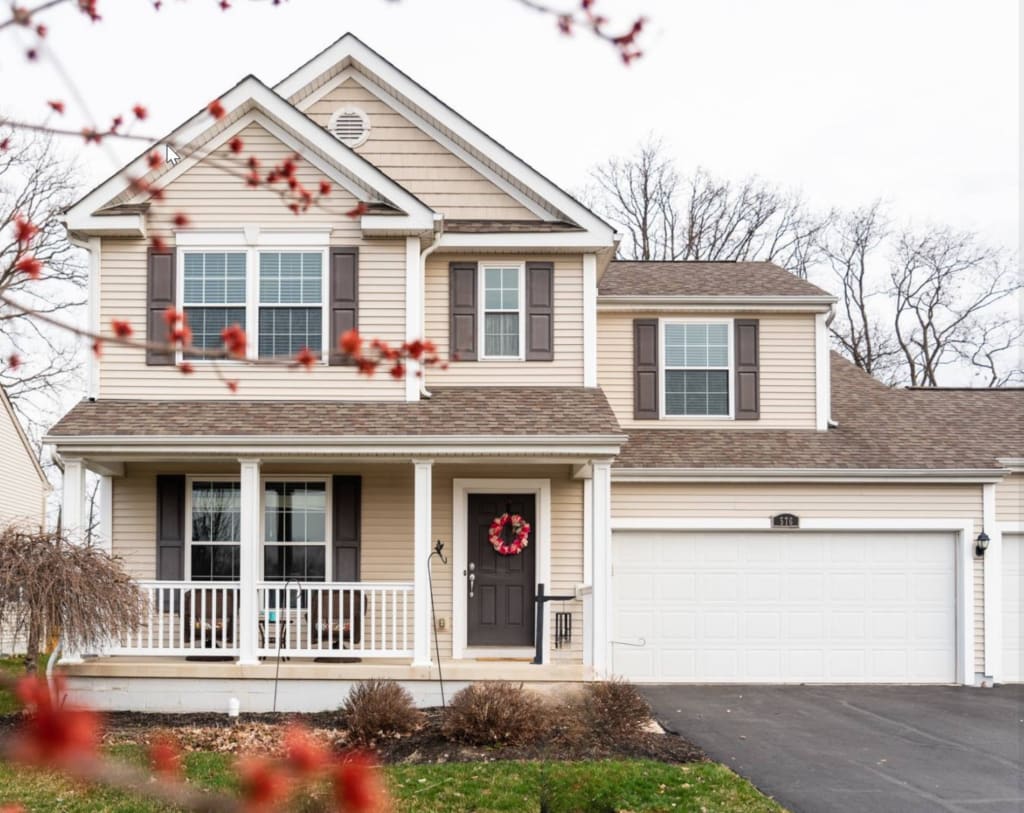

Can you afford to keep the house after an Ohio divorce?
Only if you can refinance on one income. In the example below, a 7% refinance adds about $1,064 a month, and a quitclaim deed does not take you off the mortgage.
By Jim West, REALTOR® | CDRE · RCS-D · CDS | Published October 6, 2026 | Updated October 15, 2026
You can win the house in your divorce and still not be able to keep it.
I see this more often than people expect here in Marysville and across Union County. The settlement says the house is yours. Everybody signs. Then the lender looks at the numbers — one income, a new loan at current rates, the equity buyout on top — and the whole plan falls apart.
Before that happens to you, here is what to check.
Before we go further: I'm not an attorney and I'm not a lender. This is general information from the real estate side. Your attorney and your loan officer are the ones who apply it to your situation, and I'd want both of them involved. The Ohio State Bar Association is a place to start if you need an attorney.
How Does the Buyout Math Work When You Keep the House?
When one spouse keeps the house, they usually have to pay the other spouse a share of the marital equity. In most cases that happens through a refinance: you take out a new loan big enough to pay off the existing mortgage and pay your spouse their portion. That new loan is almost always larger — and at current rates, much more expensive.
Here is an example. These are round numbers, not anyone's specific situation:
- Home value: $450,000
- Mortgage balance: $250,000
- Equity: $200,000
- Even split: you owe your spouse $100,000
- New loan: $350,000, plus closing costs
Ohio starts from an equal division of marital property, but a court can divide it differently when an equal split would be inequitable. So treat the 50/50 above as an illustration, not a rule. How Ohio divides marital property is worth reading before you plug in your own numbers.
Now the part that catches people off guard. Plenty of Union County homeowners bought or refinanced in 2020 or 2021, when 30-year rates were around 3%. Freddie Mac's weekly survey put the 30-year fixed average at 7.40% on October 8, 2026, up from 6.30% a year earlier (Freddie Mac Primary Mortgage Market Survey). Here is what that does to the payment:
| Loan | Rate | Monthly principal and interest | Source |
|---|---|---|---|
| Existing loan, $300,000 original amount | 3.00% | $1,264.81 | 30-year fixed amortization calculation |
| New buyout loan, $350,000 | 7.00% | $2,328.56 (+$1,063.75 a month, about $12,765 a year) | 30-year fixed amortization calculation |
| Same $350,000 loan at the October 8 national average | 7.40% | $2,423.33 (+$1,158.52 a month) | Freddie Mac PMMS, Oct. 8, 2026 |
Example only, not a quote. Principal and interest on a 30-year fixed loan; taxes and insurance are extra on both. The national average assumes 20% down and excellent credit, so your quote will differ.
Of that $1,064 increase, about $731 comes from the higher rate and about $333 comes from the larger loan. Same house. Same street. Same kitchen. More than a thousand dollars a month more — on one income instead of two.
Watch Jim walk through the buyout math at 1:16. For the full formula, including taxes and non-cash buyouts, see the spousal buyout calculation guide for Ohio divorces. This post is about what the payment does to your budget.
Can You Qualify for the New Loan on One Income?
Running the buyout math is step one. Step two is finding out whether you can qualify for that loan on your own.
When you refinance without your spouse, the lender weighs your income alone against all of your debts. Child support or alimony can affect that calculation depending on whether you pay or receive it. Ask your loan officer, too, how the lender treats a refinance that pays out a spouse under a divorce agreement, because that can change how much you are allowed to borrow against the house.
Get a pre-approval run with the new loan amount, at current rates, using only your income, before anyone commits to anything in writing. How to get approved for a mortgage after divorce in Ohio covers what lenders look at. Budget for closing costs as well; how much closing costs run in Ohio is a good starting point. Jim covers the qualifying piece at 3:46.
Going through a divorce and trying to figure out what to do with the house? I work alongside lenders, attorneys, and financial specialists to help Ohio homeowners see the real numbers before decisions get made. Call or text me at (614) 507-5732.
Can You Assume Your Current Mortgage Instead of Refinancing?
Before you refinance from 3% to 7%, find out whether your current loan can be assumed.
A loan assumption means one spouse takes over the existing mortgage at the existing rate, and the other spouse is released from it.
- FHA and VA loans are generally assumable.
- Most conventional loans are not, but some servicers have a process specifically for divorce situations.
Call your servicer and ask. Get the answer in writing. Watch Jim explain loan assumption at 4:05.
An assumption does not solve everything. You still have to qualify with the servicer, and it does not create cash to pay your spouse their share of the equity. That money has to come from somewhere else in the settlement, sometimes by trading against retirement accounts or other assets. But keeping a 3% rate instead of taking on 7% can be worth a great deal over the life of the loan. It is worth one phone call before you agree to refinance.
If it is a VA loan and the veteran is the one leaving, ask about VA entitlement: whether it stays tied to the existing loan and what that means for using a VA loan again later.
Does a Quitclaim Deed Take You Off the Mortgage?
No. This is the mistake that follows people for years after the divorce is done.
A quitclaim deed takes a spouse's name off the title, which is the ownership of the house. One spouse signs and figures they are finished. They are not. A quitclaim changes who owns the house; it does not change who owes the mortgage. If your name is on that loan, you are still legally responsible for it, even if you no longer live there and no longer own any part of the house.
If your ex misses a payment two years from now, that late payment can show up on your credit. And when you try to buy your next home, the old mortgage still counts against your debt-to-income ratio.
A federal law, the Garn-St Germain Act, generally keeps a lender from calling the full loan due just because the house transferred to a spouse in a divorce. Your attorney can confirm how it applies to your loan. But the due-on-sale trigger is rarely what hurts people. What hurts people is staying on a mortgage for a house they no longer own.
That is why a refinance, or a written release from the loan, is what actually matters. Your name has to come off the loan, not just the deed. Jim explains why the quitclaim is not the finish line at 5:37, and I have written a longer breakdown of the quitclaim deed trap for divorcing homeowners.
What Should You Check Before You Agree to Keep the House?
- Run the buyout math with current rates. Work out the new loan amount, get a payment estimate at today's rates, and compare it plainly to what you can carry on one income.
- Ask about loan assumption. Call your servicer before agreeing to refinance, and get the answer in writing.
- Make sure your name comes off the loan, not just the deed. If you are the one leaving, do not sign the deed without confirming how and when you are being released from the mortgage.
Sometimes selling and splitting the proceeds is the cleanest outcome for both sides. If the numbers on keeping the house do not work, you want to know that before the settlement is final, not after. Read about how a court can order the sale of a house in an Ohio divorce if spouses cannot agree, and see who gets the house in a divorce in Ohio for the bigger picture.
Frequently Asked Questions: Keeping the House in an Ohio Divorce
Can I keep the house after a divorce in Ohio?
Yes, but keeping the house usually requires a refinance that pays off the existing mortgage and buys out your spouse's share of the equity. At rates near 7%, the new payment can be more than $1,000 a month higher than your current one, and you have to qualify on your income alone.
How is the buyout amount calculated when one spouse keeps the house?
The buyout is your spouse's share of the marital equity. If a home is worth $450,000 and the mortgage balance is $250,000, the equity is $200,000, and an even split means a $100,000 buyout. Ohio starts from an equal division of marital property but allows a different split when equal would be inequitable, so ask your attorney how your numbers apply.
Does a quitclaim deed remove me from the mortgage in Ohio?
No. A quitclaim deed removes your name from the title, which is ownership, but it does not release you from the mortgage. If your name is still on the loan, you remain legally responsible for it until the loan is refinanced or the lender gives you a written release.
Can I assume my current mortgage instead of refinancing after a divorce?
Possibly. FHA and VA loans are generally assumable, and some servicers of conventional loans have a process for divorce situations. Call your servicer before you agree to refinance and get the answer in writing, because keeping a 3% rate instead of taking on 7% can be worth a great deal over the life of the loan.
The Conversation to Have Early
I work with Union County and Central Ohio homeowners who are divorcing and own a house, and I help them understand their options before anything is signed. I hold the CDRE, RCS-D, and CDS designations, which makes me the only real estate agent in Ohio with all three divorce real estate credentials. I work alongside lenders, attorneys, and financial specialists so people can see the real numbers before decisions get made.
If you are trying to work out whether keeping the house makes sense, or whether selling might be the better move, I'm happy to be a resource. No obligation. Call or text me at (614) 507-5732, or visit jimwestteam.com. I also have a free Ohio Divorce Home Sales Guide I can send you; just text me and ask for it. Everything we talk about stays between us.
This article is general information about how keeping the marital home typically works in Ohio. It is not legal, tax, or lending advice. Talk with your attorney and your loan officer about your situation.
Jim West
REALTOR® | CDRE · RCS-D · CDS
The Jim West Team at Revolution Realty LLC
Marysville, Ohio | (614) 507-5732 | jimwestteam.com
The only real estate agent in Ohio with all three divorce designations.
About Jim West
Jim West is a REALTOR® and Certified Divorce Real Estate Expert (CDRE) serving Marysville, Ohio and Union County. He holds all three divorce real estate designations — CDRE, RCS-D, and CDS — and is the only agent in Ohio with this full credential set. Jim works alongside attorneys, lenders, and financial specialists to help homeowners understand their options when a marriage is ending. Call or text (614) 507-5732, or visit jimwestteam.com.